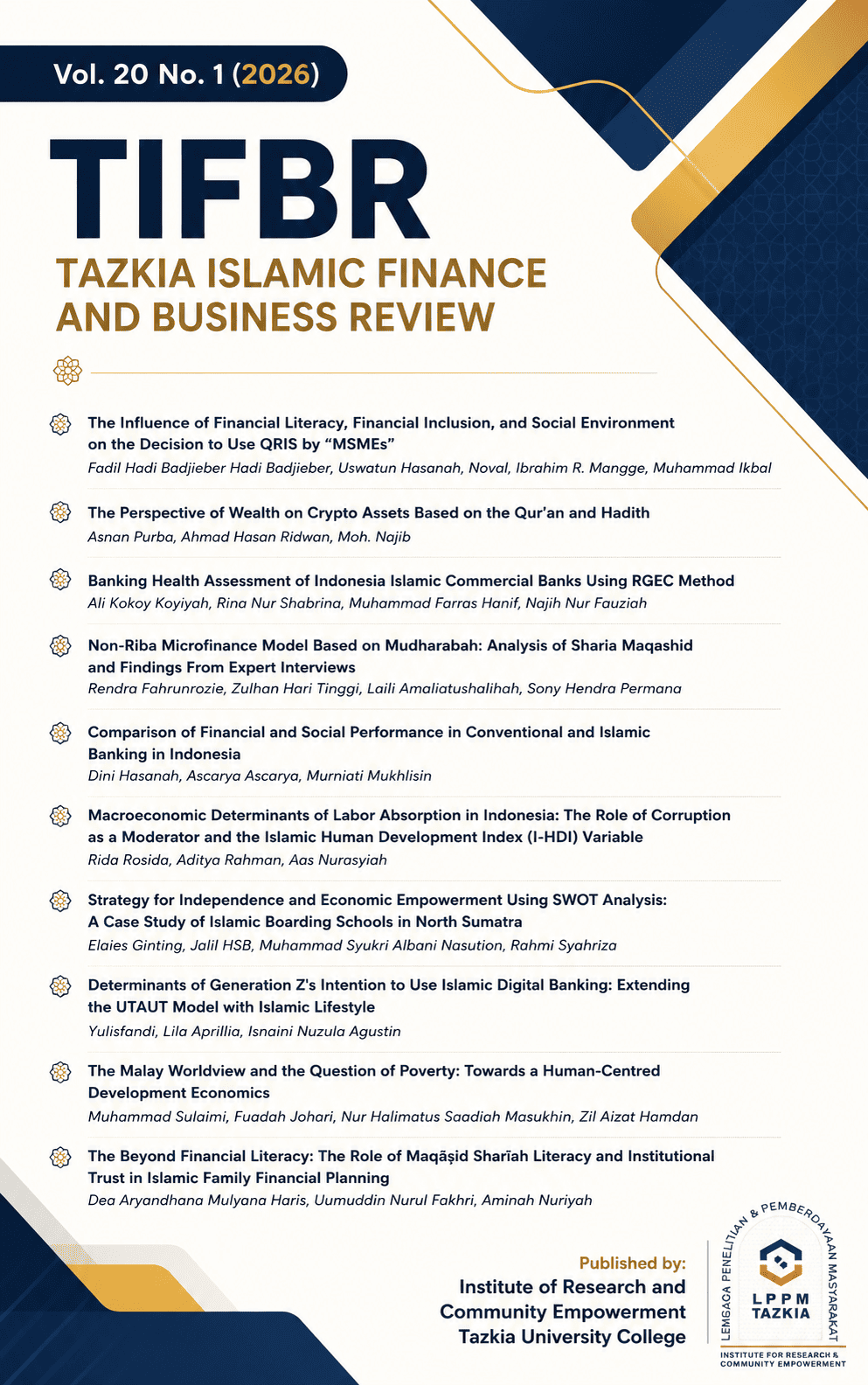
Macroeconomic Determinants of Labor Absorption in Indonesia: The Role of Corruption as a Moderator and the Islamic Human Development Index (I-HDI) Variable
DOI:
https://doi.org/10.30993/tifbr.v20i1.478الملخص
تهدف هذه الدراسة إلى دراسة امتصاص العمالة في إندونيسيا خلال الفترة 2021-2024. كما تسعى إلى التحقيق في آثار النمو الاقتصادي، والاستثمار الأجنبي المباشر، والإنفاق الحكومي، ومؤشر التنمية البشرية الإسلامي (I-HDI)، والتضخم التي يتوسطها الفساد على امتصاص العمالة. تستخدم الدراسة منهجاً كمياً مع اختبار الفرضيات. ويُستخدم تحليل الانحدار المعتدل (MRA) كأداة تحليلية أساسية. تكشف النتائج أن النمو الاقتصادي، والاستثمار الأجنبي المباشر، ومؤشر التنمية البشرية الإسلامي، والتضخم لها تأثيرات كبيرة على امتصاص العمالة، في حين أن الإنفاق الحكومي لا يظهر تأثيراً كبيراً. علاوة على ذلك، يوسّط الفساد بشكل كبير العلاقة بين الاستثمار الأجنبي المباشر، ومؤشر التنمية البشرية الإسلامي، والتضخم مع امتصاص العمالة. وعلى النقيض من ذلك، لا يوسّط الفساد بشكل كبير العلاقة بين النمو الاقتصادي أو الإنفاق الحكومي وامتصاص العمالة.
التنزيلات
منشور
كيفية الاقتباس
إصدار
القسم
الرخصة
الحقوق الفكرية (c) 2026 Author and Publisher

هذا العمل مرخص بموجب Creative Commons Attribution-NonCommercial-ShareAlike 4.0 International License.

Tazkia Islamic Finance and Business Review (TIFBR) is licensed under a Creative Commons Attribution-NonCommercial 4.0 International License.
Authors who publish with this journal agree to the following terms:
- Authors retain copyright and grant the journal right of first publication with the work simultaneously licensed under a Creative Commons Attribution License that allows others to share the work with an acknowledgment of the work's authorship and initial publication in this journal.
- Authors are able to enter into separate, additional contractual arrangements for the non-exclusive distribution of the journal's published version of the work (e.g., post it to an institutional repository or publish it in a book), with an acknowledgment of its initial publication in this journal.
- Authors are permitted and encouraged to post their work online (e.g., in institutional repositories or on their website), as it can lead to productive exchanges, as well as earlier and greater citation of published work (See the Effect of Open Access).