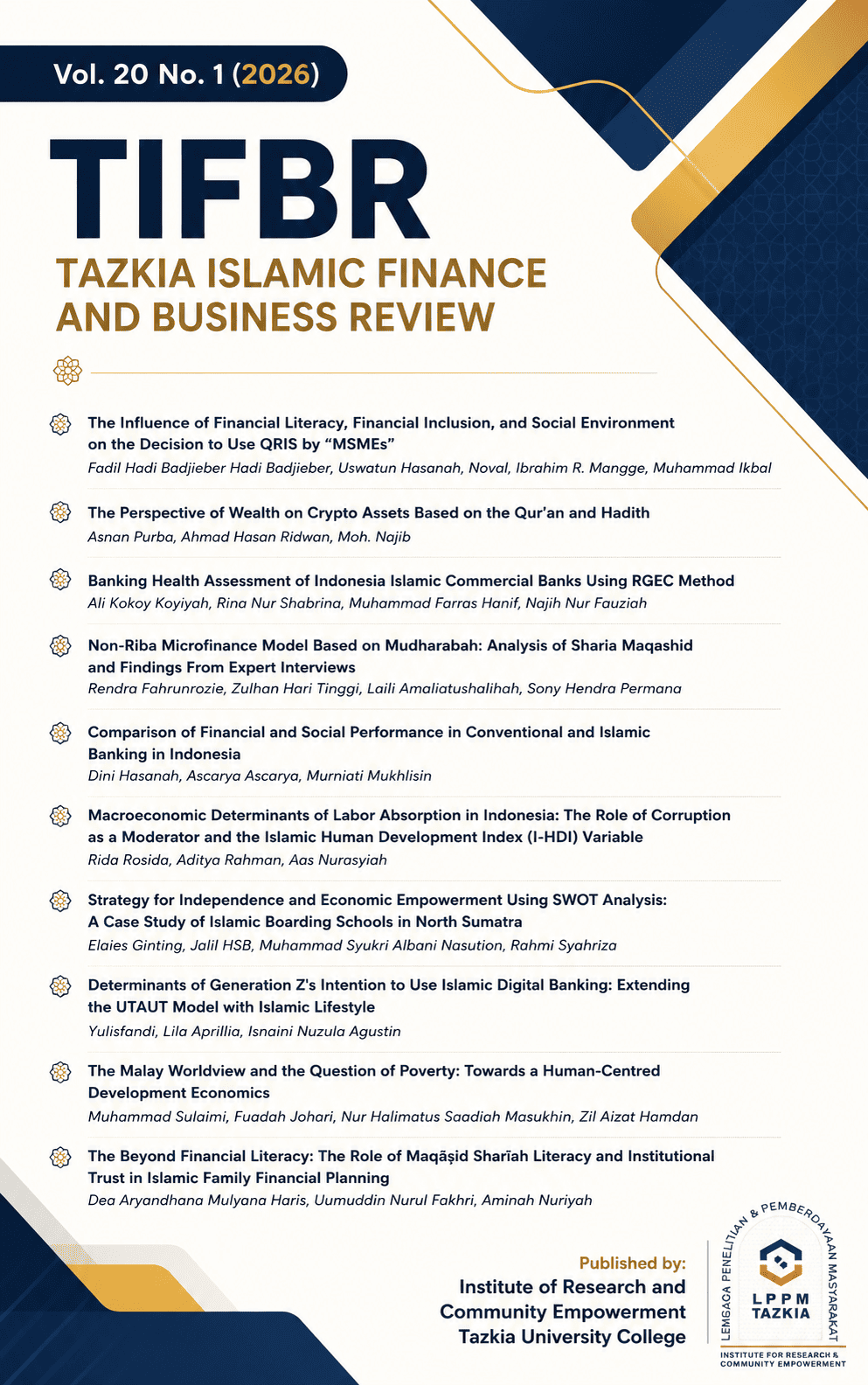
Determinants of Generation Z’s Intention to Use Islamic Digital Banking: Extending the UTAUT Model with Islamic Lifestyle
DOI:
https://doi.org/10.30993/tifbr.v20i1.519الملخص
تهدف هذه الدراسة إلى فحص العوامل المؤثرة على نية جيل زد في استخدام الخدمات المصرفية الرقمية، وذلك بتطبيق نموذج النظرية الموحدة لقبول واستخدام التكنولوجيا (UTAUT) ودراسة الدور المعدِّل لنمط الحياة الإسلامي. تستخدم الدراسة منهجًا كميًا باستخدام نمذجة المعادلات الهيكلية للمربعات الصغرى الجزئية (PLS-SEM) عبر برنامج SmartPLS 4.0. تكشف النتائج أن للاعتياد وإمكانية التجربة تأثيرًا إيجابيًا وهامًا على نية استخدام الخدمات المصرفية الرقمية، بينما لا يُظهر كلٌّ من الدافع الوجداني وقيمة السعر تأثيراتٍ ذات دلالة إحصائية. إضافةً إلى ذلك، لم يُلاحظ أن نمط الحياة الإسلامي يُعدِّل العلاقة بين الاعتياد ونية استخدام الخدمات المصرفية الرقمية. تشير هذه النتائج إلى أن الإلمام بالتكنولوجيا وفرصة تجربة الخدمات المصرفية الرقمية مباشرةً هما المحركان الرئيسيان لتبني الخدمات المصرفية الرقمية الإسلامية بين جيل زد. تُسهم هذه الدراسة في أدبيات الخدمات المصرفية الرقمية والتمويل الإسلامي من خلال توسيع إطار عمل UTAUT ليشمل نمط الحياة الإسلامي، وتقديم أدلة تجريبية حول المحددات السلوكية لتبني الخدمات المصرفية الرقمية بين جيل زد في سياق الخدمات المصرفية الإسلامية.
التنزيلات
منشور
كيفية الاقتباس
إصدار
القسم
الرخصة
الحقوق الفكرية (c) 2026 Author and Publisher

هذا العمل مرخص بموجب Creative Commons Attribution-NonCommercial-ShareAlike 4.0 International License.

Tazkia Islamic Finance and Business Review (TIFBR) is licensed under a Creative Commons Attribution-NonCommercial 4.0 International License.
Authors who publish with this journal agree to the following terms:
- Authors retain copyright and grant the journal right of first publication with the work simultaneously licensed under a Creative Commons Attribution License that allows others to share the work with an acknowledgment of the work's authorship and initial publication in this journal.
- Authors are able to enter into separate, additional contractual arrangements for the non-exclusive distribution of the journal's published version of the work (e.g., post it to an institutional repository or publish it in a book), with an acknowledgment of its initial publication in this journal.
- Authors are permitted and encouraged to post their work online (e.g., in institutional repositories or on their website), as it can lead to productive exchanges, as well as earlier and greater citation of published work (See the Effect of Open Access).